
A Living Part of Solihull’s History
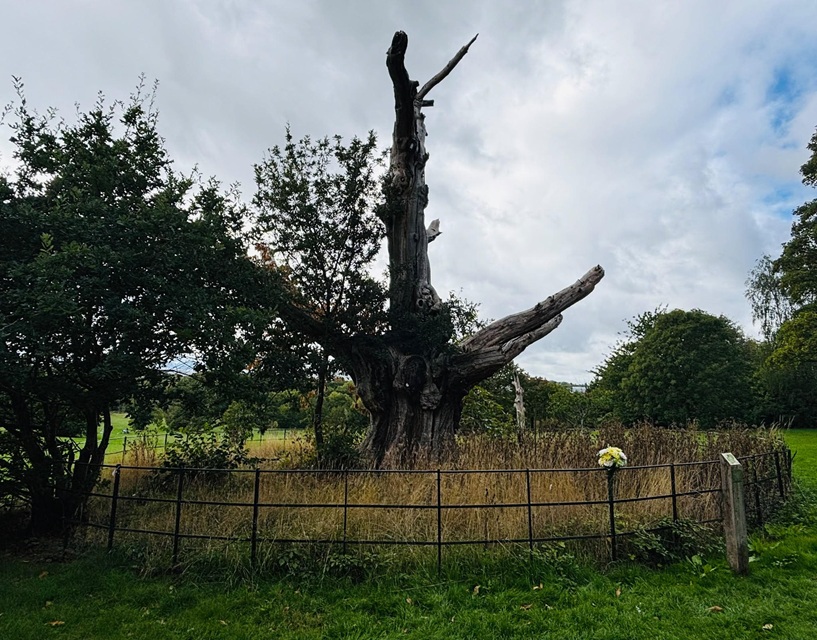
The Octopus Sweet Chestnut is often described as an ancient witness to Solihull’s changing landscape.
Standing on the top of the hill in Elmdon Park it has watched Solihull develop for 500 years. First planted in the reign of Henry VIII during his marriage to Catharine of Aragon, this tree has seen incredible history including the Gunpowder Plot, the reigns of Elizabeth I and Queen Victoria, and has survived two world wars. During the Second World War the tree escaped the bombing which landed on Elmdon in November 1940, killing several nearby residents.
Locally it has seen the erection of Elmdon Manor in 1785 with it's large walled garden; the Manor's demolition in 1956; and the creation of St. Nicholas Church in 1780. With views far across Solihull and Birmingham it currently overlooks the JLR factory.
Why the Octopus Sweet Chestnut Matters
- It is one of Solihull’s oldest known trees
- It forms part of the borough’s local heritage
- It provides a visible connection between past and present
- It highlights the value of ancient and veteran trees
- It helps raise awareness of significant trees in Solihull
Ancient Trees and Local Heritage
Ancient and veteran trees are valuable not only because of their age, but also because of the habitats they provide and the history they represent.
Older trees can support a wide range of wildlife, including insects, birds, fungi and other organisms that depend on mature tree features such as hollowing, deadwood and textured bark.
Protecting Significant Trees
Significant trees help shape the identity of local places. They can become landmarks, meeting points, wildlife habitats and important reminders of the natural history of an area.
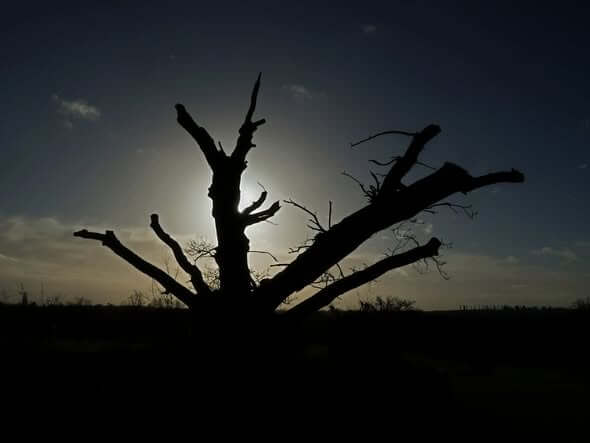
By recognising and recording trees such as the Octopus Sweet Chestnut, communities can better understand their value and help ensure they are respected and protected. In 2018, the Elmdon community turned out to celebrate the 500th birthday of one of it’s oldest residents. the Octopus Tree.
Ancient Tree Inventory
Use the Ancient Tree Inventory to find ancient and veteran trees recorded across the UK.
View Inventory